The "Quiet Firing" Algorithm: How Companies Professionally Ghost Their Most Loyal Employees

"The most dangerous sound in your career isn't a screaming boss. It’s the polite silence of a leadership team that has decided to let you depreciate in peace." — Ivan Palomino
In the old days—let’s say, the Mad Men era or the wolfish 1980s—firing someone was a dramatic event. It involved shouting, a cardboard box, and security escorting you out of the building while your colleagues pretended to stare intensely at their typewriters. It was brutal, but it was honest.
Today, corporate Europe is far too polite for that. We don't do "brutal" anymore. We do "passive-aggressive."
If you are over 50 and reading this, you probably aren't worried about being fired next Tuesday. You are worried about something far more insidious: The slow, silent, and maddening erosion of your relevance.
This is the Quiet Firing Algorithm.
It is not a piece of software. This is a behavioral algorithm—a predictable, step-by-step psychological process used by conflict-averse managers to nudge you out the door without ever having to pay your severance package. It is professional ghosting. And if you don't recognize the code, you are already losing the game.
The Geography of the Cupboard
Before we dissect the mechanics, let’s look at the cultural landscape, because every European country has its own flavor of this phenomenon.
In France, the term is brutally visual: Placardisation. Being put in the cupboard. You keep your salary, your title, and your parking spot. But you are stripped of your tasks until you are essentially paid to watch the paint peel. It sounds like a dream to the exhausted, but for a professional who defines themselves by their utility, it is psychological torture.
In Germany, they call it the Abstellgleis—the "siding" or "dead-end track." Imagine a high-speed ICE train station. The young talent is zooming by at 300 km/h on the main lines. You? You have been shunted to a rusty side track covered in weeds. You aren’t derailed. You’re just… parked. Indefinitely.
The outcome is the same: The organization creates an environment so boring, so isolating, and so devoid of purpose that you eventually "choose" to leave. You quit. They save the redundancy payout. The algorithm completes its loop.
Why It Happens: The Coward’s Tax
Why do companies do this? Is it a grand conspiracy to purge the silver-haired workforce?
Sometimes. But more often, it is simply Managerial Cowardice.
Let’s look at the reality of your boss. Statistically, they are likely 10 to 15 years younger than you. They are stressed, they are chasing KPIs, and quite frankly, they are terrified of you.
Managing a 24-year-old is easy. You tell them what to do, and if they mess up, you correct them.
Managing a 55-year-old who has been at the company longer than the manager has been alive? That is awkward. It feels like telling your dad how to drive.
When a manager feels that a senior employee is "slowing down" or "resistant to change," they rarely have the courage to say: "Ivan, your skills in X are outdated. I need you to learn Y by next month, or we have a problem."
That conversation is high-conflict. It risks a lawsuit. It requires emotional maturity.
So, they choose the path of least resistance. They stop inviting you to the strategy meetings. They stop giving you the "stretch" assignments. They smile and say, "Everything is fine," while secretly redistributing your most interesting work to Jason, the 28-year-old who works 14 hours a day and doesn't ask questions.
They aren't trying to hurt you. They are just hoping you will get the hint and disappear.
The 3 Steps of the Quiet Firing Algorithm
How do you know if you are being run through the algorithm? It rarely happens overnight. It follows a distinct pattern of decay.
Phase 1: The Feedback Desert
This is the most dangerous phase because it feels comfortable. Suddenly, your performance reviews become bland.
The Sign: You stop getting constructive criticism.
The Trap: You think, "Great! I'm doing a perfect job."
The Reality: A manager only criticizes employees they want to keep. Feedback is an investment. If your boss stops correcting you, they have stopped investing in you. They have moved you from "Asset to be Developed" to "Liability to be Managed."
Phase 2: The Benevolent Exclusion
This is where they frame your irrelevance as a favor to you.
The Sign: "Oh, we didn't invite you to the AI Transformation kickoff because we know you're busy with the legacy audit. We didn't want to overload you."
The Reality: You are being siloed. They are actively preventing you from touching the "new" money. In corporate physics, if you are not close to the revenue or the innovation, you are decaying.
Phase 3: The Maintenance Loop
Your workload doesn't necessarily decrease, but the quality of the work collapses.
The Sign: You are tasked with maintenance, compliance, audits, and "keeping the lights on."
The Reality: You are becoming the caretaker of the past, while others are building the future. The tragedy is that you are often the most qualified person to fix the future, but you are too busy fixing the printer for the interns.
The Employee’s Reaction: The Death Spiral
Here is the cruelest part of the algorithm: It relies on your reaction to succeed.
When a high-performing 50+ professional realizes they are on the Abstellgleis, they usually react in one of two ways, both of which are fatal.
Reaction A: The Grump. You get angry. You complain to colleagues. You start sentences with, "Well, back in 2005 we tried this and it failed." You become the cynical blocker.
Result: You give the manager exactly the evidence they need to label you "toxic" and "resistant to change." You fired yourself.
Reaction B: The Withdrawal (Learned Helplessness). You retreat. You stop raising your hand. You do exactly what is asked and nothing more. You think, "If they don't value me, I won't give them my energy."
Result: You become invisible. You confirm their bias that you are "coasting" to retirement. You have effectively signed your own professional death warrant.
How to Break the Algorithm
If you recognize these signs, do not panic. And definitely do not retreat to the cupboard. The only way to break a pattern of avoidance is with Direct Collision.
You must become the most uncomfortable thing in your manager’s life: A mirror.
1. Force the "Awkward" Conversation
Stop accepting the "everything is fine" performance review. If your boss gives you a bland review, challenge it.
The Script: "I notice I'm not getting much critical feedback lately. I also notice I wasn't included in the new Q3 project. I feel I’m being moved to a maintenance role, and I’m not ready to slow down. What specific skills do I need to demonstrate to lead the next strategic initiative?"
Why it works: You have called their bluff. You have stripped away the "Quiet" part of Quiet Firing. Now they have to either give you a path forward or admit they don't have one.
2. Document the Ghosting
If you are in a litigious corporate environment (looking at you, France and Germany), start a "Silence Log." Document every meeting you were excluded from, every training request that was ignored, and every time your responsibilities were downgraded.
Why it works: If this ever turns into a loud firing, data is your defense. But more importantly, casually mentioning, "I've noticed I've been excluded from the last four strategy meetings," signals to HR that you are paying attention.
3. The "Reverse Ghost"
When they try to hide you, show up more. If you aren't invited to the meeting, ask to observe. If there is a new project, volunteer to mentor the junior lead.
The Mindset: Do not ask for permission to be relevant. Be relevant. If you see a problem, fix it and send the report. Make it impossible for them to claim you are disengaged.
The Verdict
The Quiet Firing Algorithm depends on your complicity. It requires you to go gently into that good night. It requires you to accept the narrative that you are "done."
But you are not done. You are just being managed by someone who doesn't know how to use you.
The moment you spot the algorithm running, you have a choice. You can let the current drag you to the siding, or you can grab the wheel. It will be uncomfortable. It might be confrontational. But it is better than rotting in the cupboard.
Start by raising your hand. Even if—especially if—they didn't call on you.
About the Author:
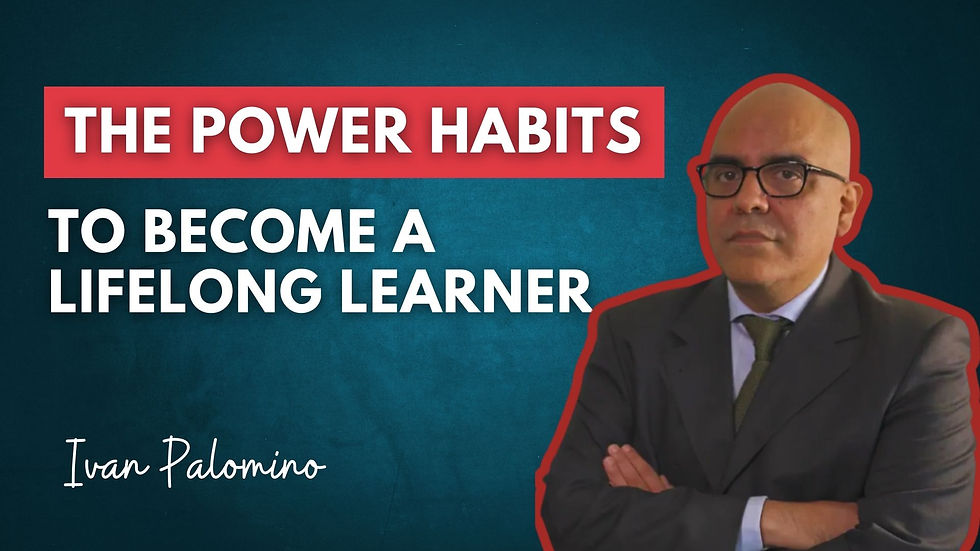
Ivan Palomino is a behavioral scientist and corporate culture expert. He helps organizations and individuals navigate the intersection of human psychology and workplace technology. This article is adapted from his upcoming book, "The Vintage Upgrade", a guide for the 50+ workforce to reclaim their relevance.